
Milestones of the Geuder Family Business
- 1920
Hans Geuder senior begins as a journeyman and later as a master craftsman and trainer, manufacturing surgical instruments in Heidelberg.
- 1936

Hans Geuder junior (left) is born.
- 1939
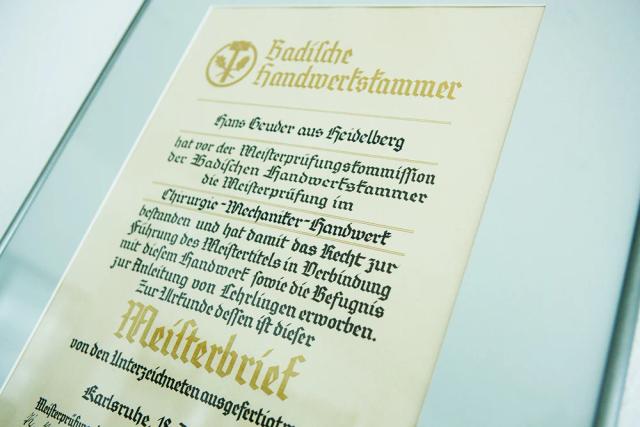
Hans Geuder senior qualifies as master craftsman in surgical mechanics.
- 1942

Volker Geuder (left) is born.
- 1948
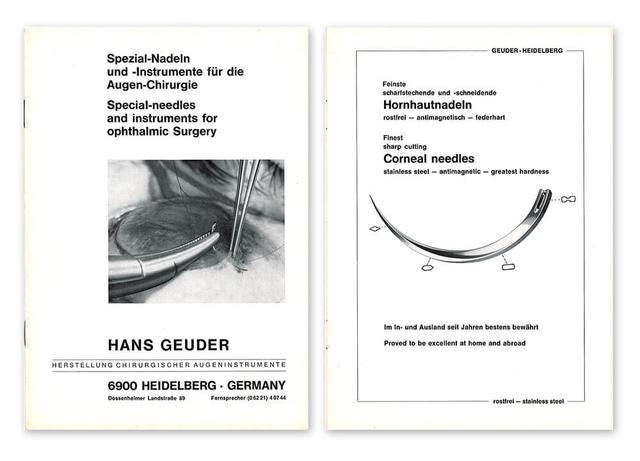
H. Harms (Tübingen) invents the continuous suture for keratoplasty. Geuder manufactures the finest atraumatic keratoplasty needles and instruments. In 2018 S. Suffo, in collaboration with Geuder, perfects PKP with the Homburg corneal marker.
- 1949
H. Ridley implants the first IOL made of acrylic (PMMA). Geuder supports this innovation early with specialised implantation forceps.
- 1949
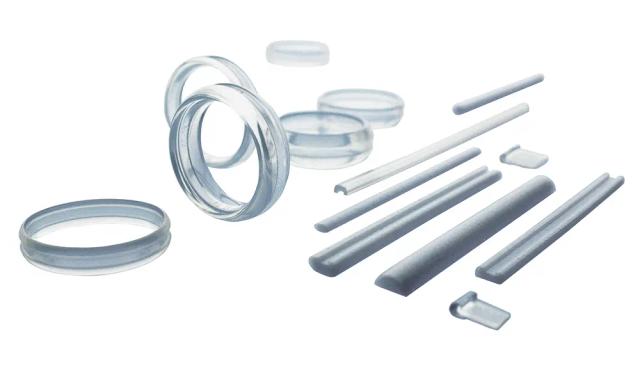
E. Custodis treats a retinal detachment with an epi-scleral explant. The cerclage technique (Schepens/Arruga, 1957) lays the foundation of modern buckling surgery. Geuder offers a broad portfolio of implants and instruments for buckling surgery to this day.
- 1951
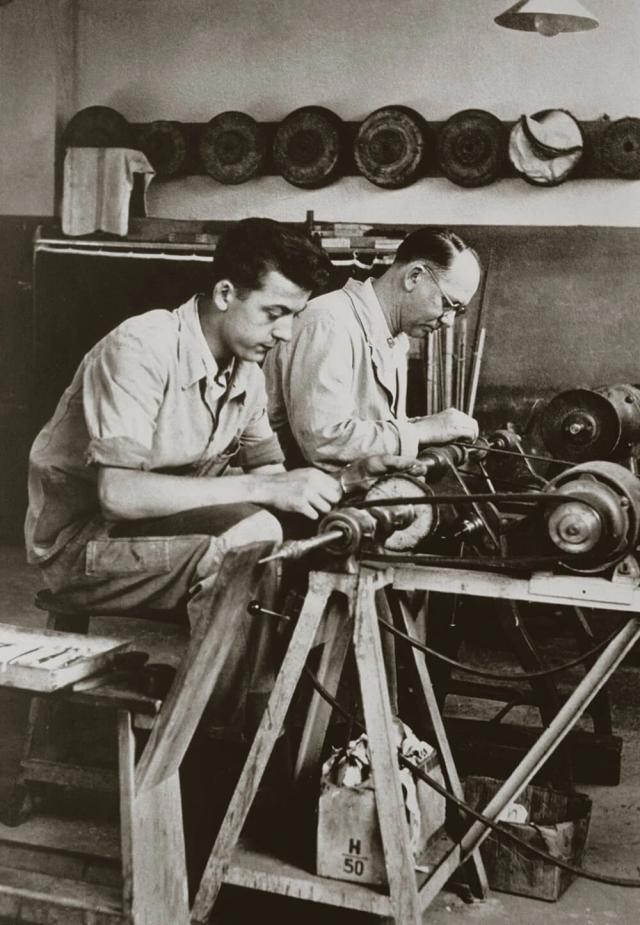
Hans Geuder senior founds the company “Hans Geuder” in a workshop in Heidelberg-Handschuhsheim.
- 1952
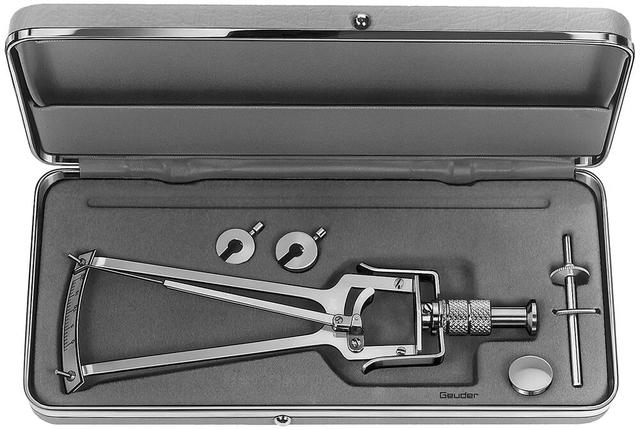
Geuder distributes the Schiøtz impression tonometer for simple tonometry.
- 1954
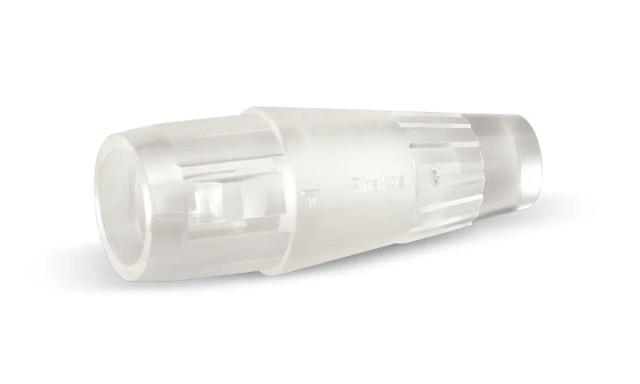
H. Goldmann invents applanation tonometry. In 2020 Geuder offers a sterile single-use tonometer head to eliminate cross-contamination risk.
- 1957
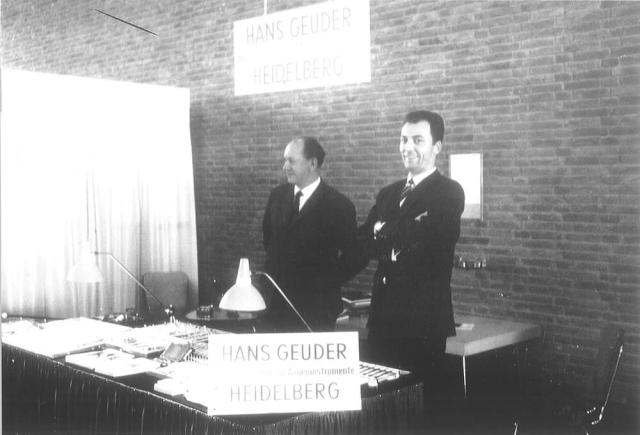
At the 62nd Annual Meeting of the German Ophthalmological Society (DOG), Hans Geuder senior and junior present their ophthalmic precision instruments.
- 1958
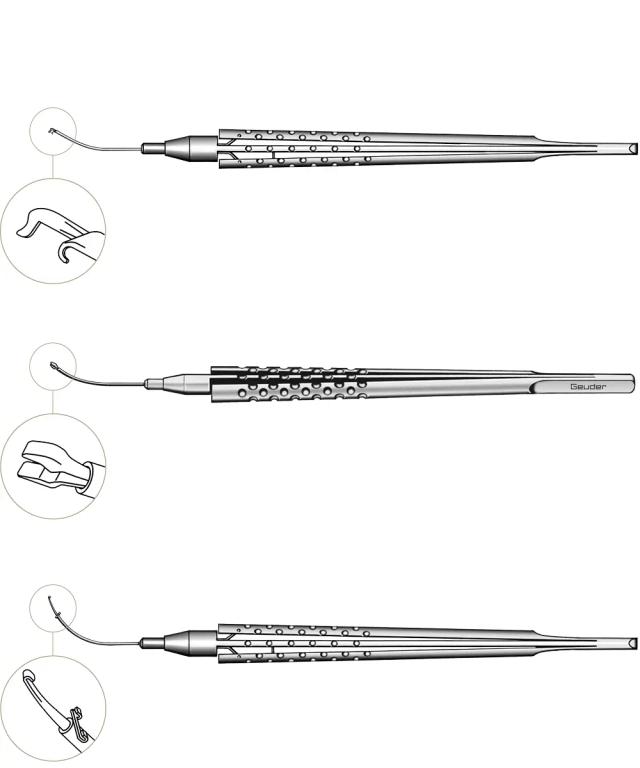
C. Binkhorst invents the first iris-fixated IOL. Geuder introduces forceps for atraumatic implantation.
- 1960
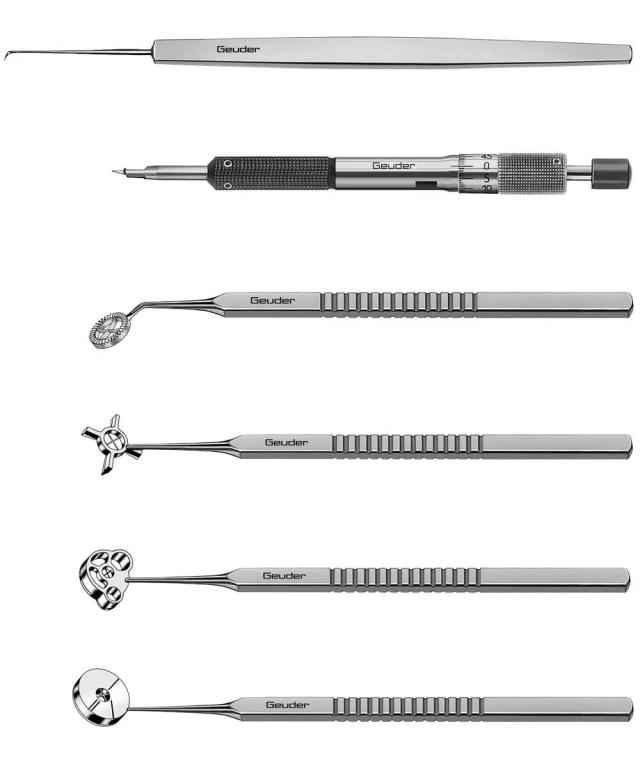
S.N. Fjodorov further develops radial keratotomy. Geuder accompanies refractive surgery history with corneal markers and diamond blades through to modern LASIK instruments.
- 1962

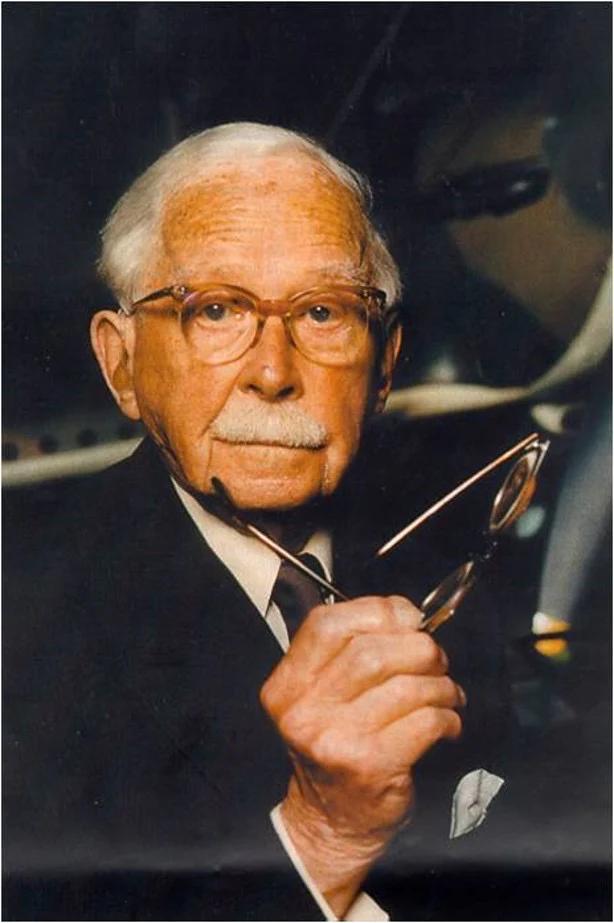
Hans Geuder junior receives his master craftsman certificate.
- 1963
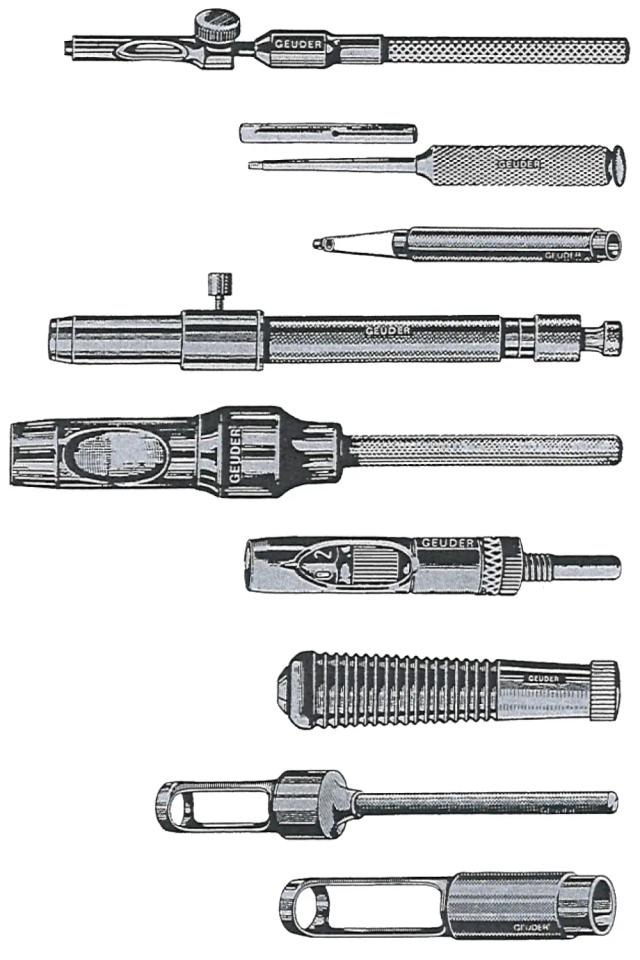
José Barraquer, “father of modern refractive surgery”, develops lamellar techniques and the first microkeratome. Geuder offers a broad portfolio of precise trephines.
- 1965
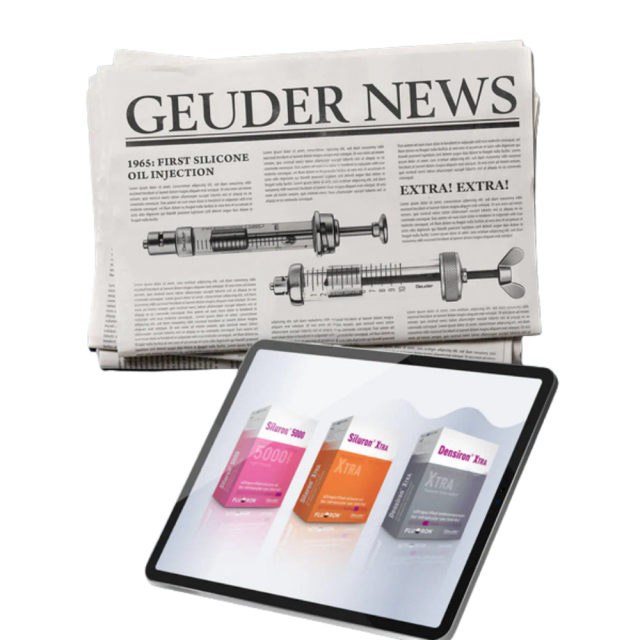
P. Cibis first injects silicone oil for retinal tamponade. Geuder offers specialised syringes and, since acquiring Fluoron GmbH in 1996, its own high-purity biocompatible silicone oils.
- 1966
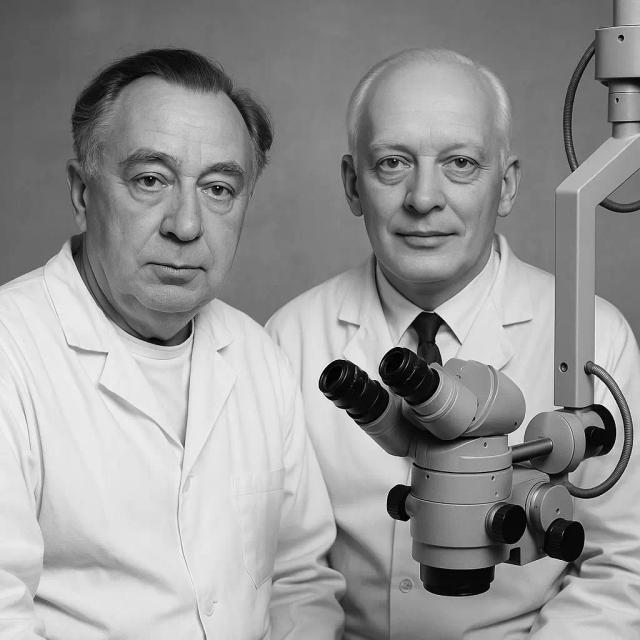
Birth of microsurgery through publications by H. Harms and G. Mackensen. Geuder manufactures trabecular probes and resterilisable instruments.
- 1967
C. Kelman develops phacoemulsification, which emulsifies cataracts using ultrasound. Geuder launches its first ultrasound generator, the PHACO U-S, in 1983.
- 1968
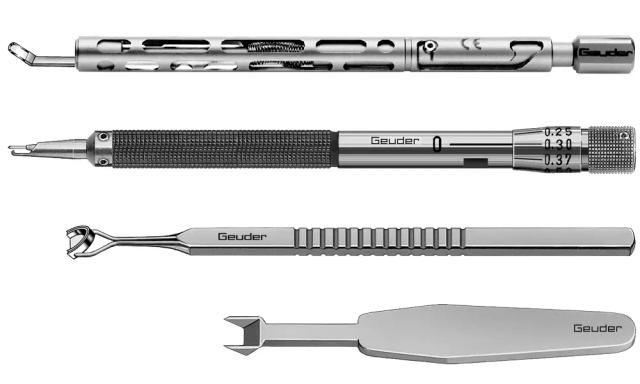
The trabeculectomy (Cairns/Watson) becomes the most common operation for chronic open-angle glaucoma. Geuder provides matching markers and knives.
- 1971
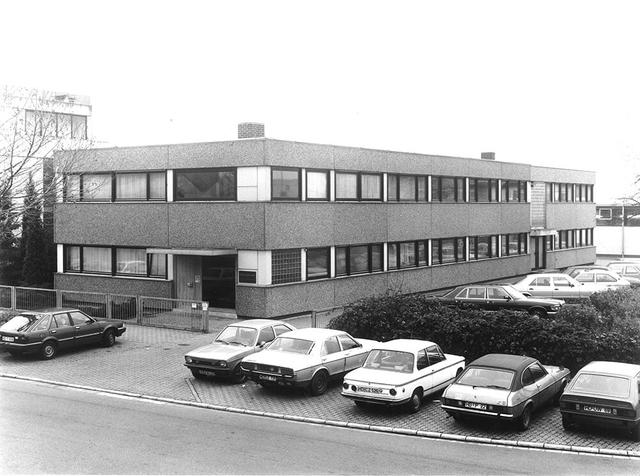
Geuder GmbH moves to Heidelberg-Rohrbach into a larger, more modern building.
- 1976
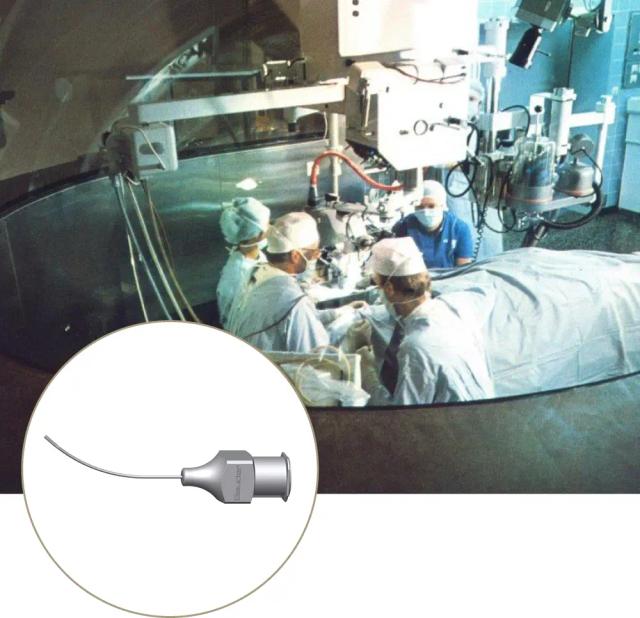
Geuder develops the successful Sautter cannula for precise intraocular use.
- 1978
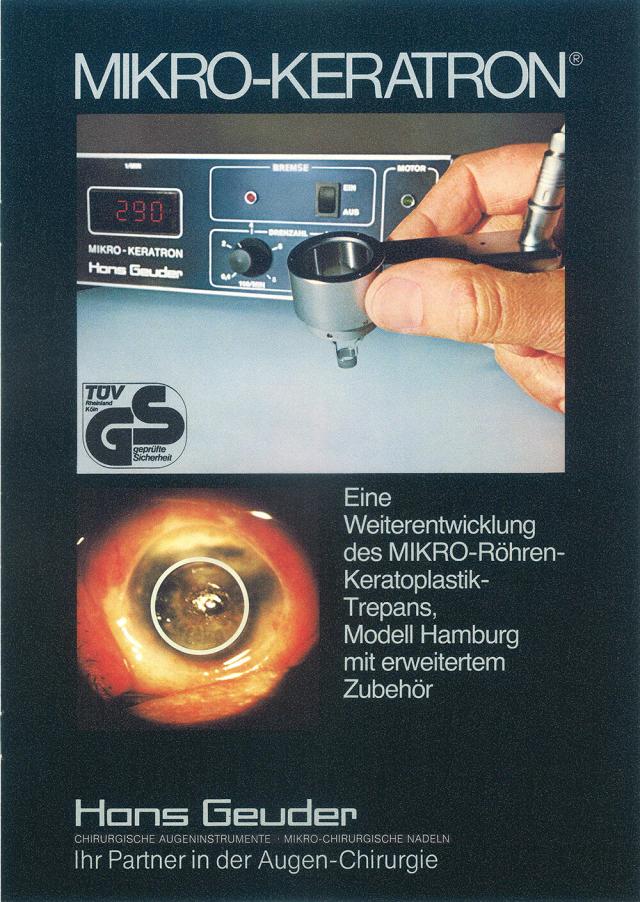
In collaboration with Prof. Naumann and Prof. Demeler, Geuder launches the MIKRO-KERATRON® – the first motor-driven trephine with optical control.
- 1978
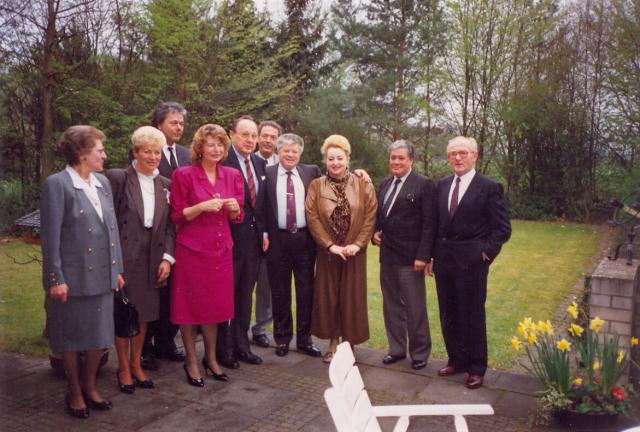
Prof. Dardenne receives the Federal Cross of Merit for introducing phacoemulsification into German cataract surgery. Pictured with Fjodorov, Genscher and the Geuder brothers.
- 1982
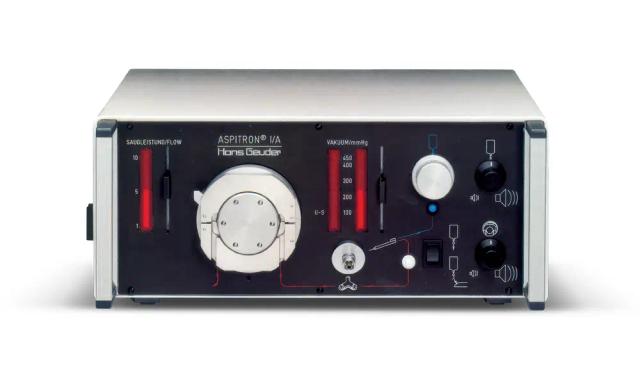
In collaboration with W. Papst (Hamburg), Geuder develops the ASPITRON® – an electronically controlled peristaltic pump for extracapsular cataract extraction.
- 1983
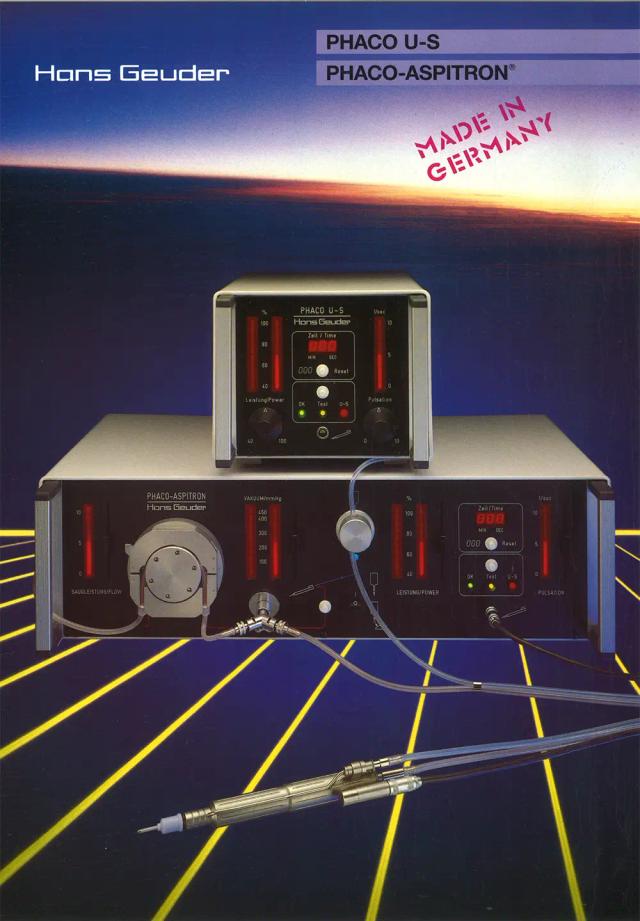
The PHACO U-S: a 43 kHz ultrasound generator. Maximum longitudinal stroke 85 μm. The piezo-ceramic handpiece weighs only 89 g.
- 1984
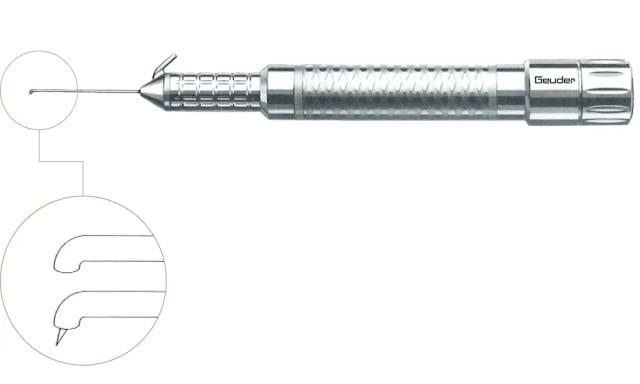
R. Adamczyk (Munich) develops together with Geuder a magnetically driven capsulotome for precise anterior capsule perforation.
- 1986
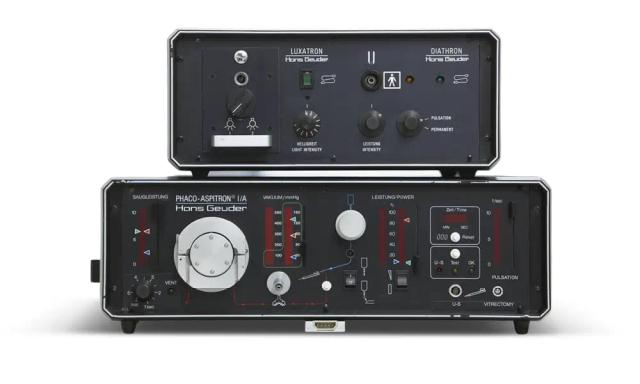
The PHACO-ASPITRON® I/A – developed with Professors Dardenne and Koch. Geuder was one of the first providers of complete modular device systems.
- 1987
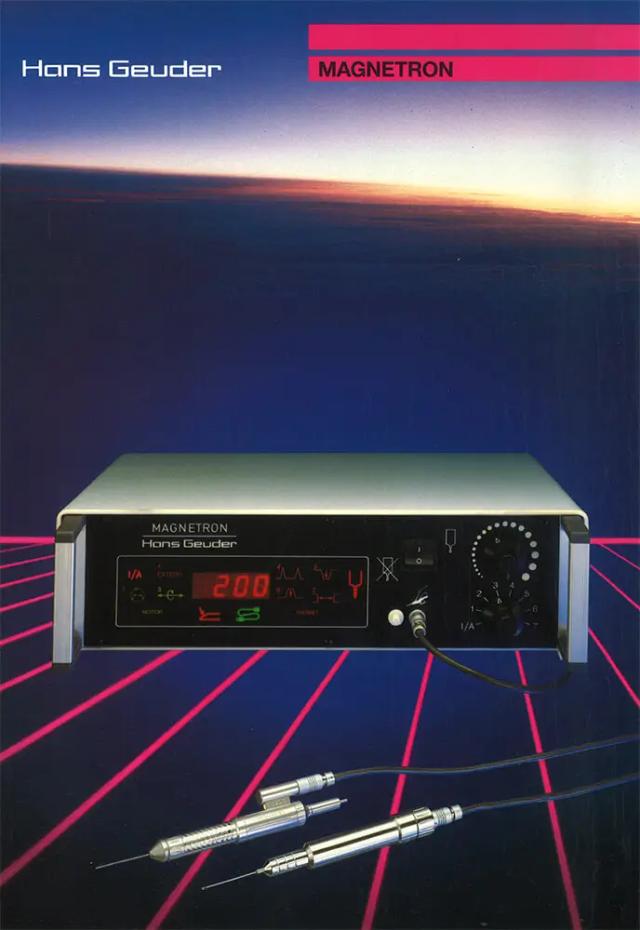
With the MAGNETRON, Geuder introduces its first vitrectomy machine, controlling vitrectomy programmes and motor trephines at 0–500 rpm.
- 1989
Son Volker becomes technical managing director and son Hans junior becomes commercial managing director.
- 1989
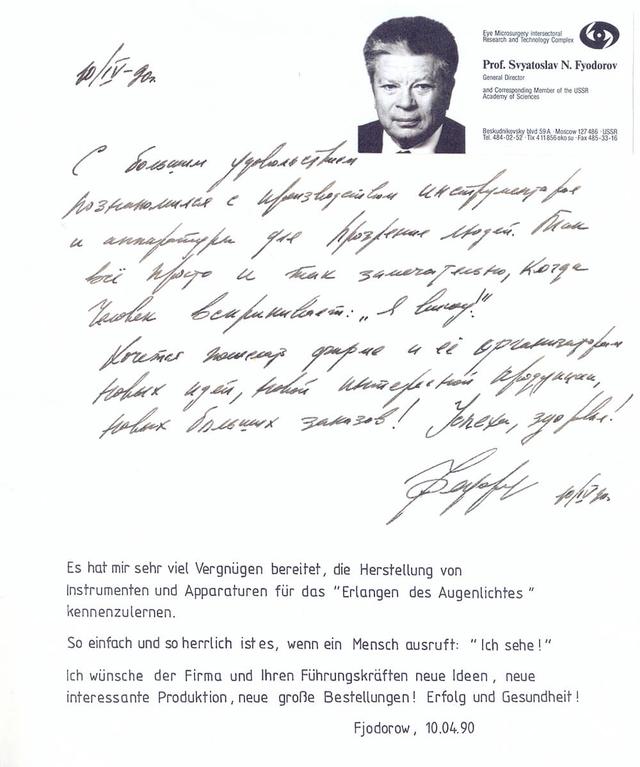
S.N. Fjodorov develops non-penetrating deep sclerectomy. Geuder enjoys a long-standing collaboration with Prof. Fjodorov.
- 1989
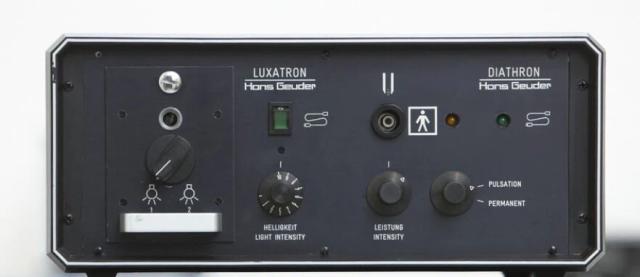
LUXATRON light source and DIATHRON diathermy – precursors of the XENOTRON and SOLEA®.
- 1990
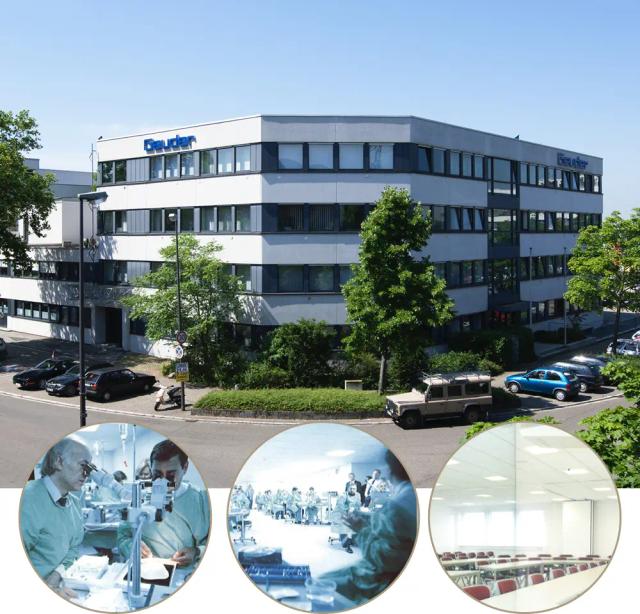
The Heidelberg building receives an auditorium. Geuder conducts continuing education courses and wet labs for surgeons.
- 1992
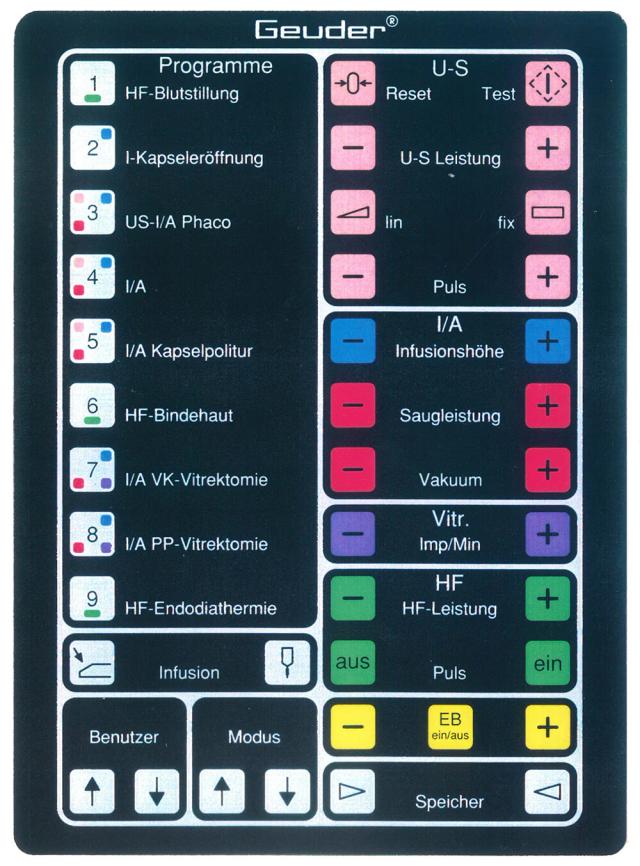
With the MEMOTRON, Geuder launches its first integrated device system for anterior and posterior segment.
- 1993
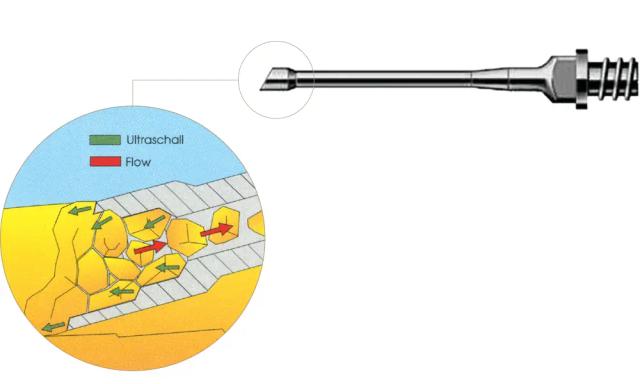
Together with H.-R. Koch, Geuder develops the mega ultrasound tip for phaco with higher vacuum and lower energy. The “Megatip” remains Geuder’s bestselling phaco tip.
- 1993
A capsulorhexis forceps requiring only a 1.0 mm incision width, in collaboration with H.-R. Koch.
- 1995
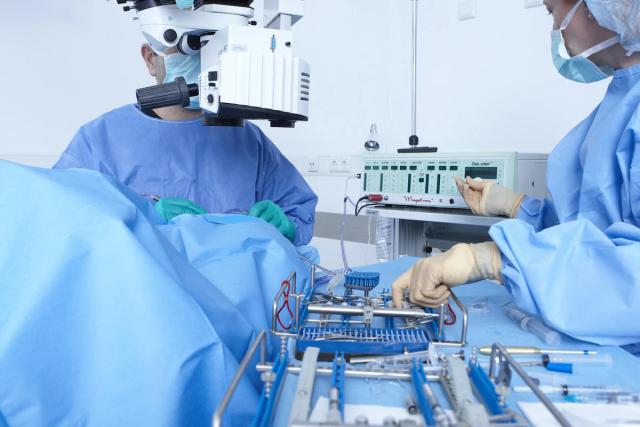
The Megatron® device system: Geuder’s first “digital” system for anterior and posterior segment in one device.
- 1996
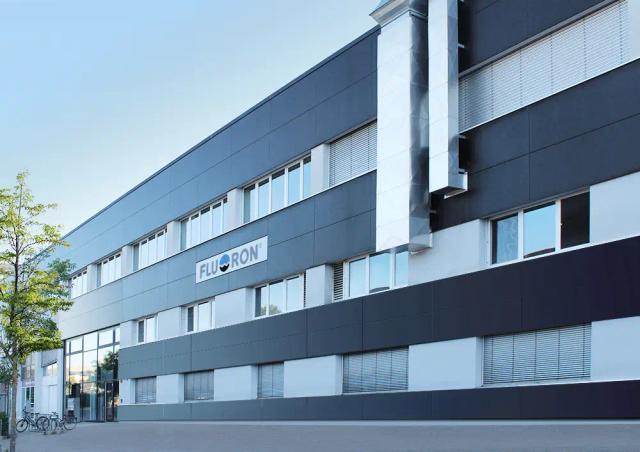
Geuder acquires Fluoron GmbH (Neu-Ulm), extending the portfolio with high-purity biocompatible fluids: silicone oils, Densiron®, F4H5® WashOut and Brilliant Peel®.
- 1998
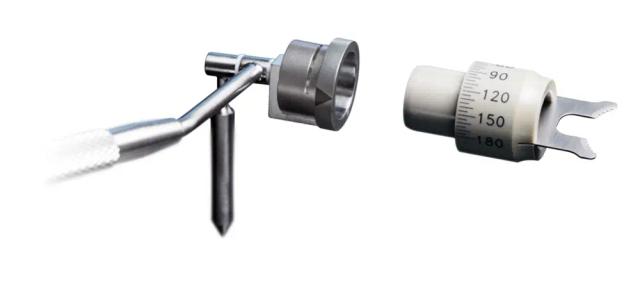
With G. Gerten (Cologne), Geuder develops the TOMARK pendulum marker for exact toric IOL axis marking, eliminating cyclorotation errors.
- 2003
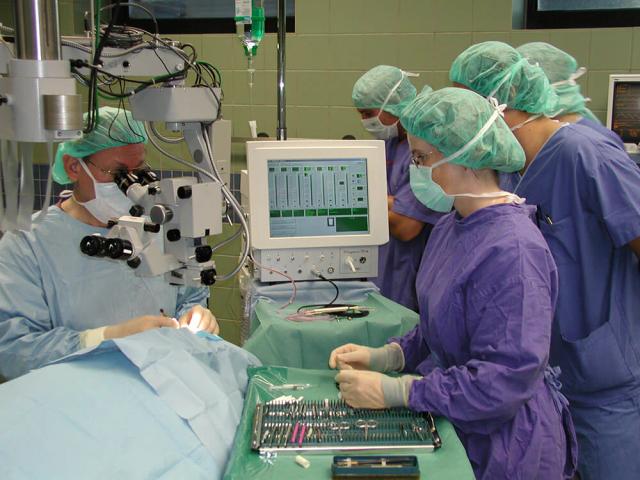
The Megatron® S3: first device system with touch screen, dual pump and programmable foot switch.
- 2005
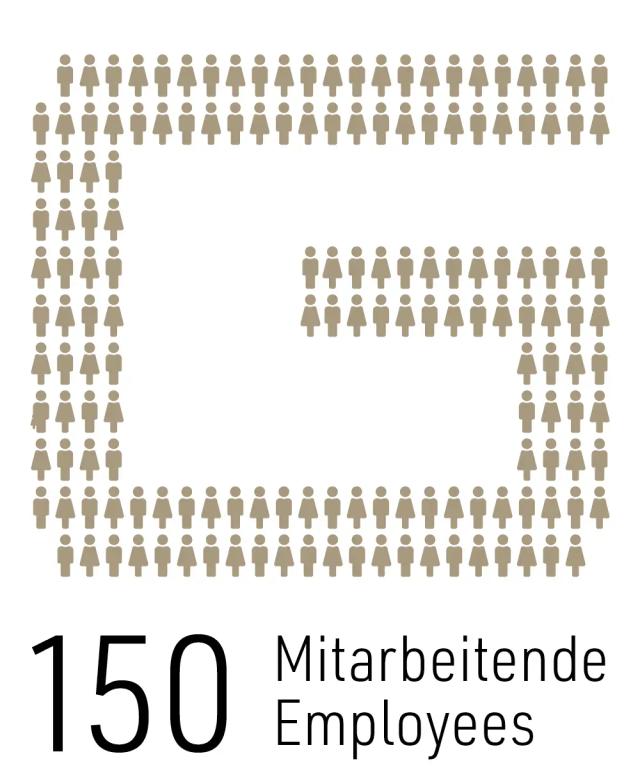
Number of employees at the Heidelberg headquarters grows to over 150.
- 2005
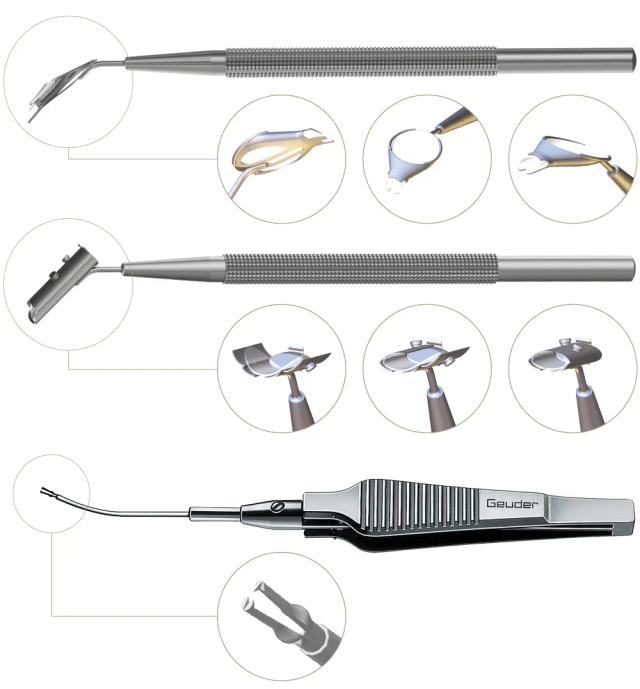
F. Price develops DSEK, M. Gorovoy the DSAEK. Geuder develops specialised implantation instruments after Neuhann and Rieck for gentle lamellar implantation.
- 2005
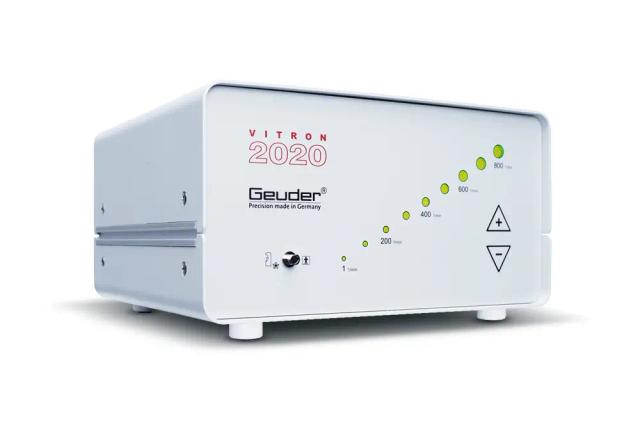
Geuder launches the VITRON 2020 to support the WHO/IAPB initiative to eliminate avoidable blindness – a low-cost device for developing countries.
- 2006
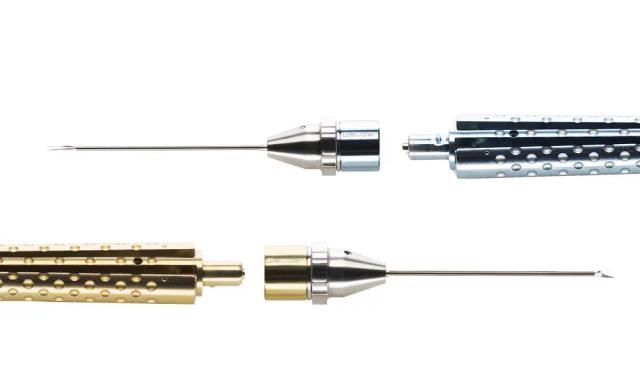
Ergoline forceps and scissors with interchangeable rotating heads for vitrectomy.
- 2007
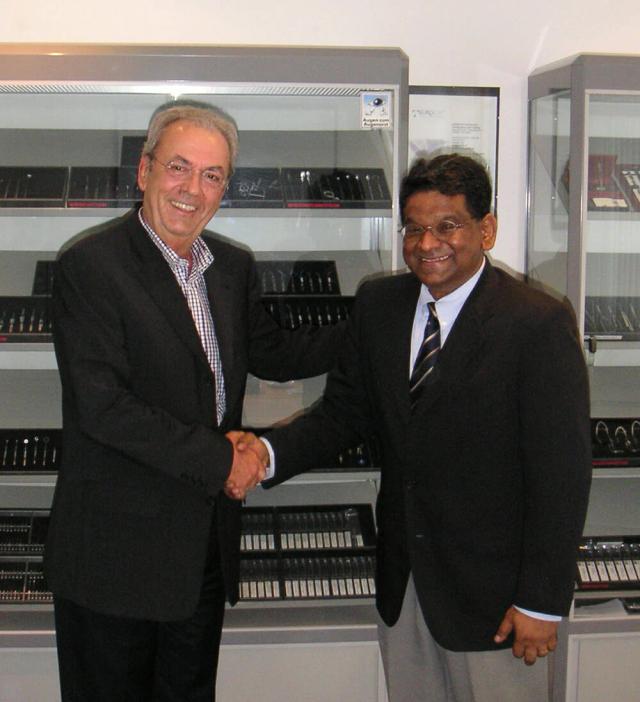
Foundation of Geuder Asia-Pacific (GAP) in Singapore. GAP now serves customers across South and South-East Asia from 15 locations.
- 2008
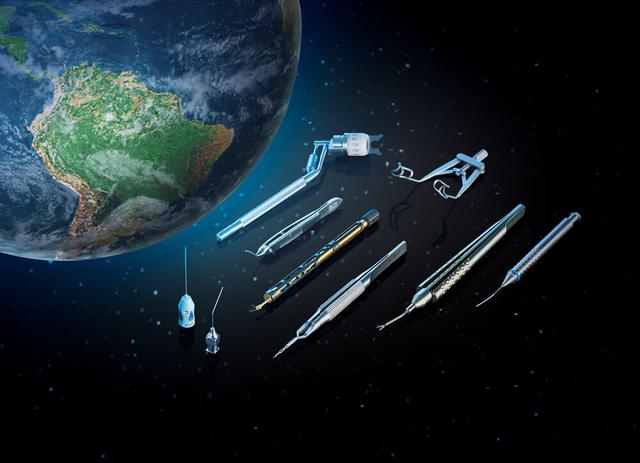
Over 3,000 products, operations in over 90 countries, over 220 employees.
- 2009
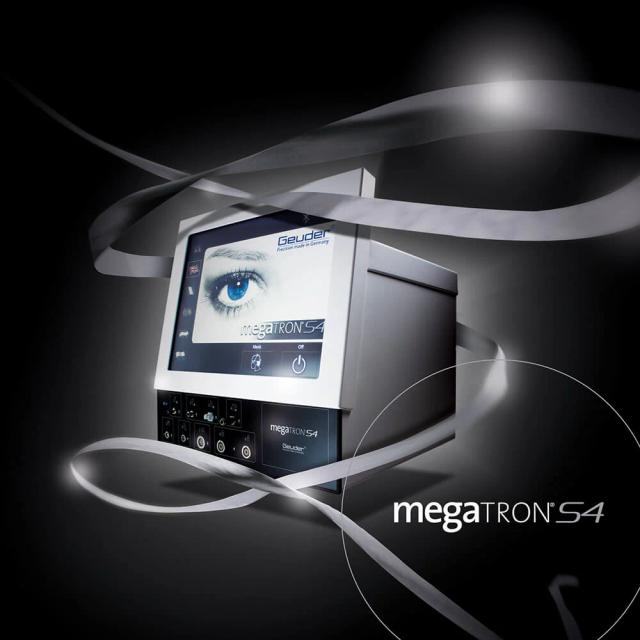
The megaTRON® S4: improved features, no external compressed air required, new peristaltic pump with venturi effect.
- 2011
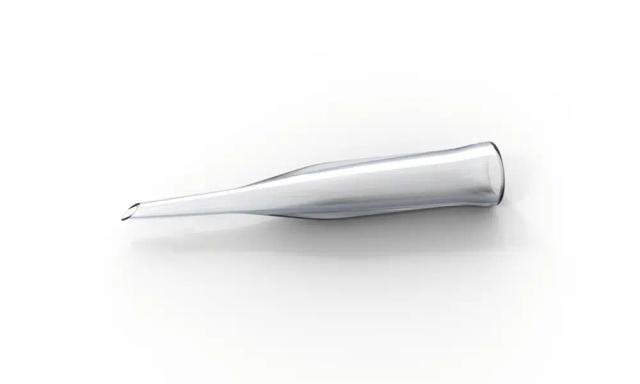
The DMEK glass cartridge by P. Szurman (Sulzbach): Geuder supports the new gentle lamellar keratoplasty technique from the outset. Over 50,000 units sold by 2021.
- 2011
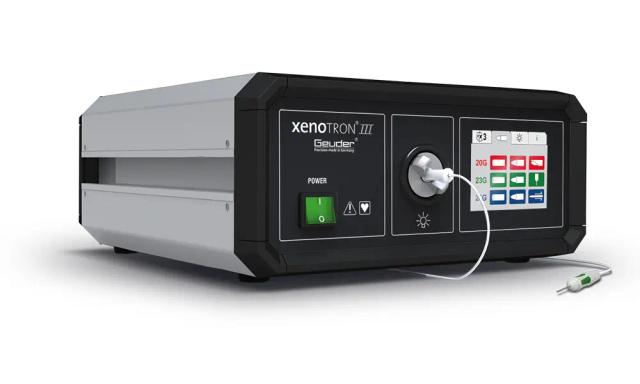
The xenoTRON® III – 80 lumens with integrated PhototoxGuard®. One of the most powerful and safest xenon light sources.
- 2011
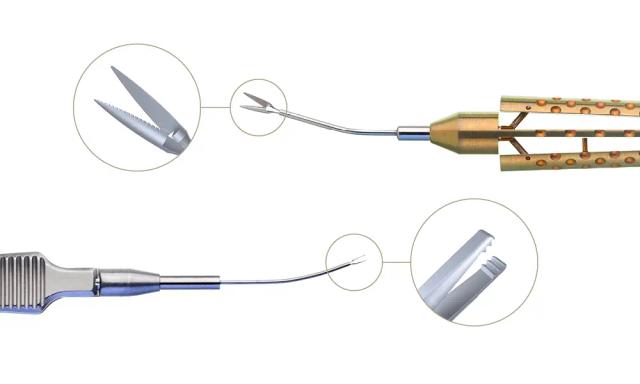
IOL scissors and forceps by Snyder/Osher for effective IOL explantation through the smallest incisions – in collaboration with M.E. Snyder and R.H. Osher (Cincinnati Eye Institute).
- 2014
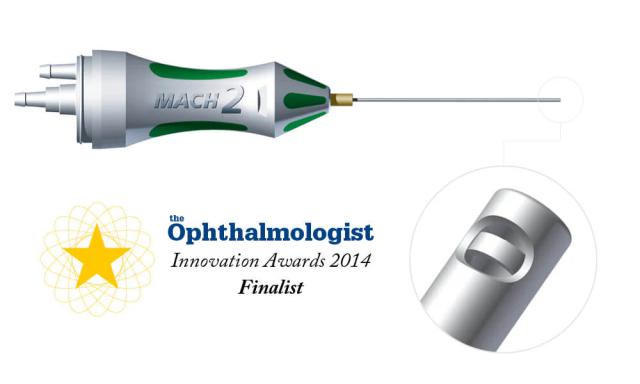
The MACH2: the first pneumatically driven vitrector with double cutting edge – up to 12,000 cpm with the megaTRON S4® HPS.
- 2014
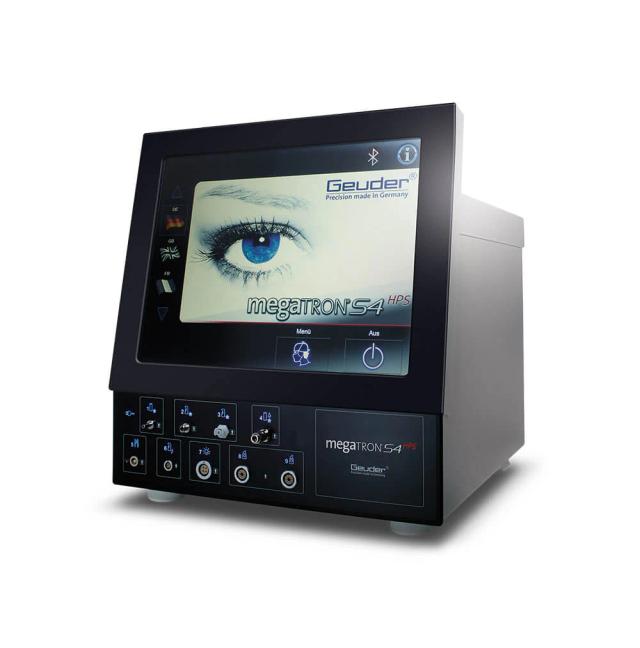
The megaTRON® S4 HPS: cut rate increased to 6,000 cpm, endoTRON® 532 nm endolaser integration – one foot switch for a complete system.
- 2014
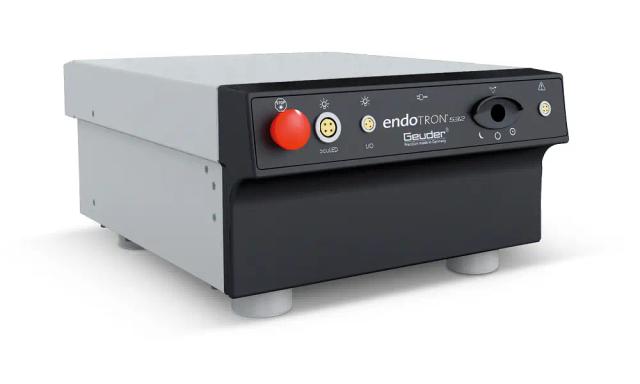
The endoTRON® 532 nm green laser completes the posterior segment system – integrated or stand-alone with Bluetooth remote control.
- 2015
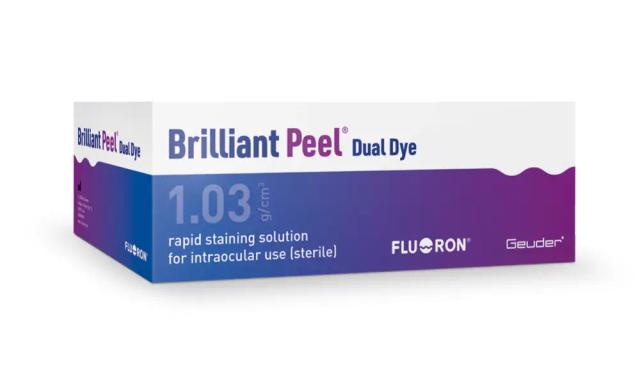
Brilliant Peel® Dual Dye selectively stains both ERM and ILM.
- 2016
Fluoron F4H5® – the only WashOut solution that completely removes silicone oil while reducing flushing cycles.
- 2016
Together with D. Wong (Liverpool), Fluoron launches Densiron® Xtra – a denser heavy silicone oil for inferior and posterior tamponade.
- 2018
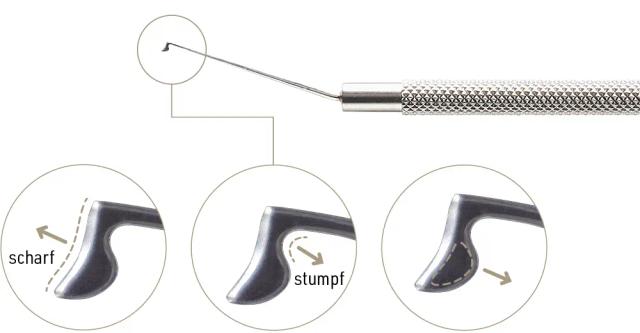
S. Jacobovitz (Brazil) invents a multifunctional chopper combining three functions. Geuder unites them in one precision instrument.
- 2018
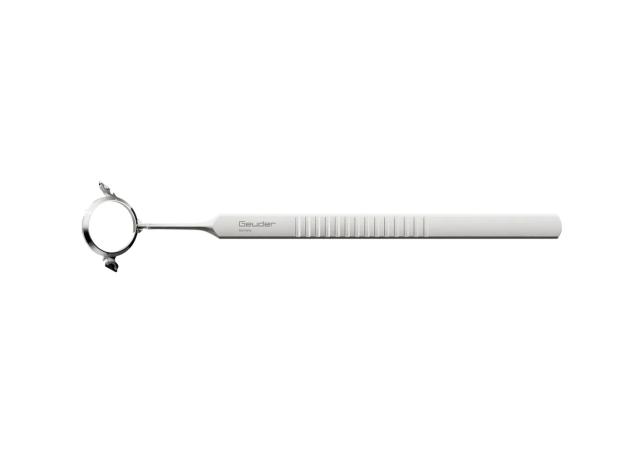
With the double-needle stabiliser developed with S. Yamane (Japan), Geuder enables flanged intrascleral IOL fixation – refractive alignment to within 0.25 D.
- 2019
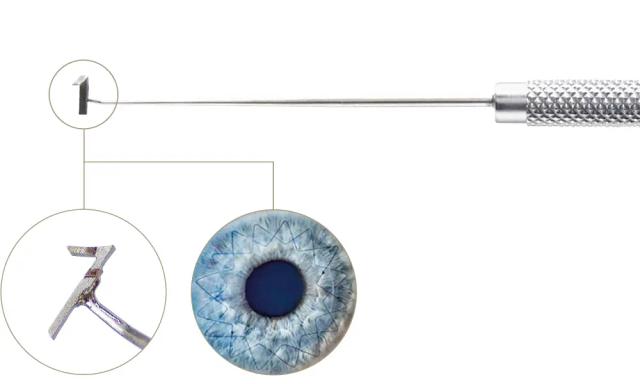
The Homburg cross-stitch suture marker by Suffo makes symmetrical and astigmatism-neutral penetrating keratoplasty possible even for less experienced surgeons.
- 2019
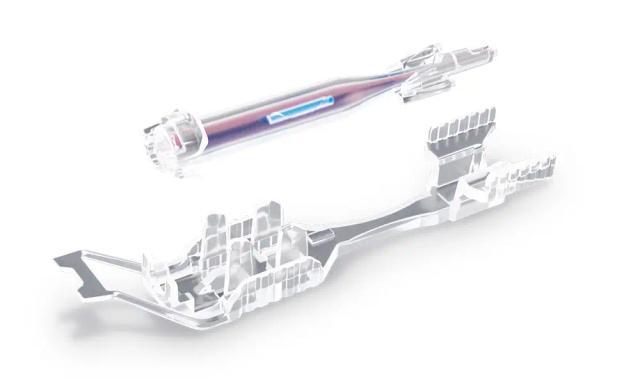
DMEK RAPID® receives CE marking – the first transport system for preloading pre-prepared Descemet lamellae.
- 2021
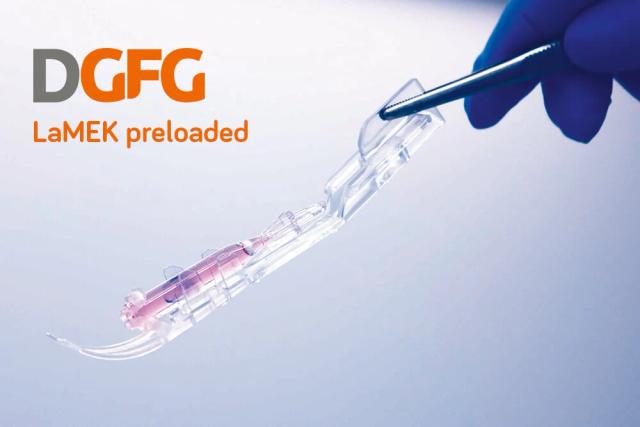
The DGFG receives PEI approval for dispatching preloaded Descemet lamellae as “LaMEK Preloaded”.
- 2021
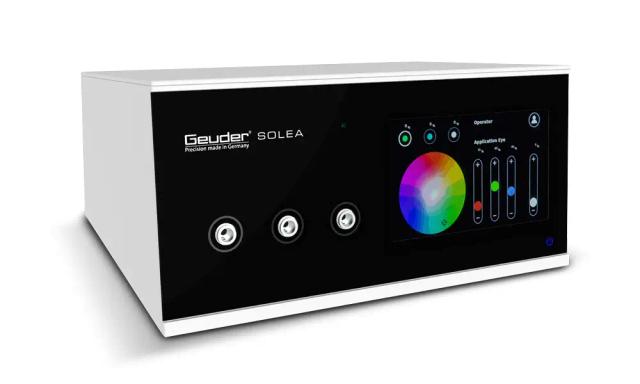
With the SOLEA®, Geuder brings the first RGB LED light source to the ophthalmic surgical market. 16.7 million colours enable entirely new views into the posterior segment.
- 2021
Geuder celebrates its 70th anniversary – over 3,000 ophthalmo-surgical tools, accompanied by many of the world’s most renowned ophthalmologists.
- 2023
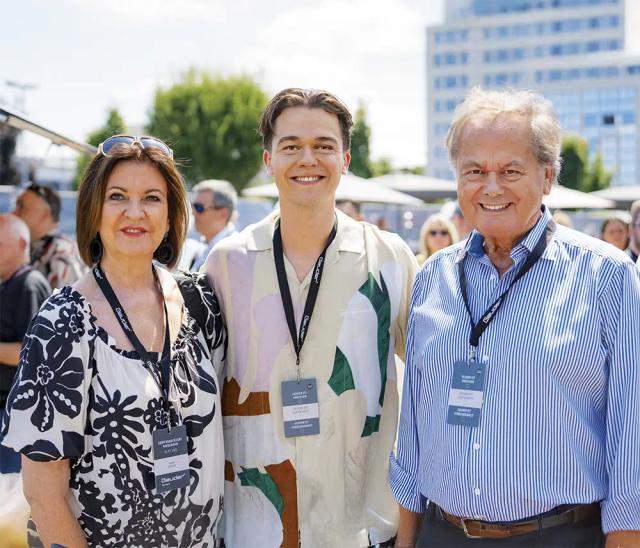
Management passes to the next generation, leading Geuder into a digital future.
- 2025
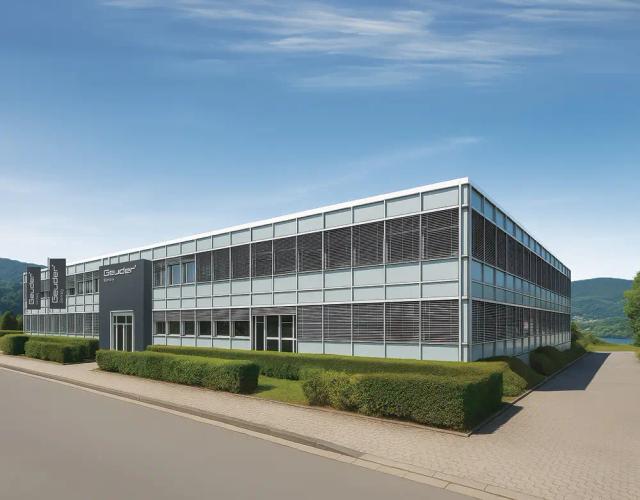
The new facility in Heidelberg-Wieblingen sets the course for continued growth.
- 2026
Geuder celebrates its 75th anniversary and works on a new generation of devices.